Tight space, strategic solutions for replacing this septic system
We recently completed a full residential septic installation for a home seller in Wilbraham who was working under a tight deadline just days before their closing date. The septic system had to be installed, inspected, and signed off in time for the sale to move forward. Our crew scheduled the work strategically so that the project wrapped up on the morning of the closing, giving the seller and their real estate team the documentation they needed and peace of mind that the system was fully compliant and ready for the new owners.
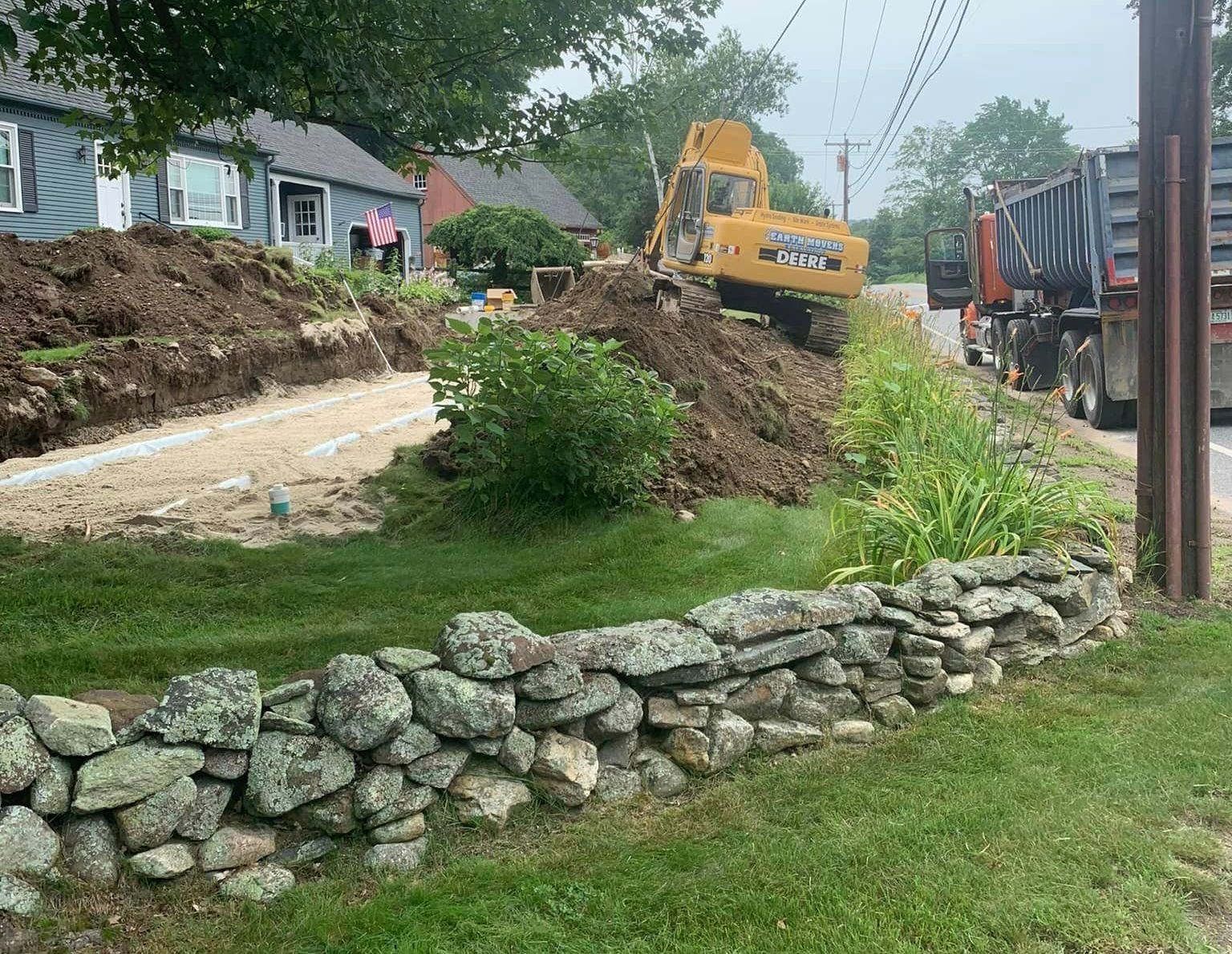
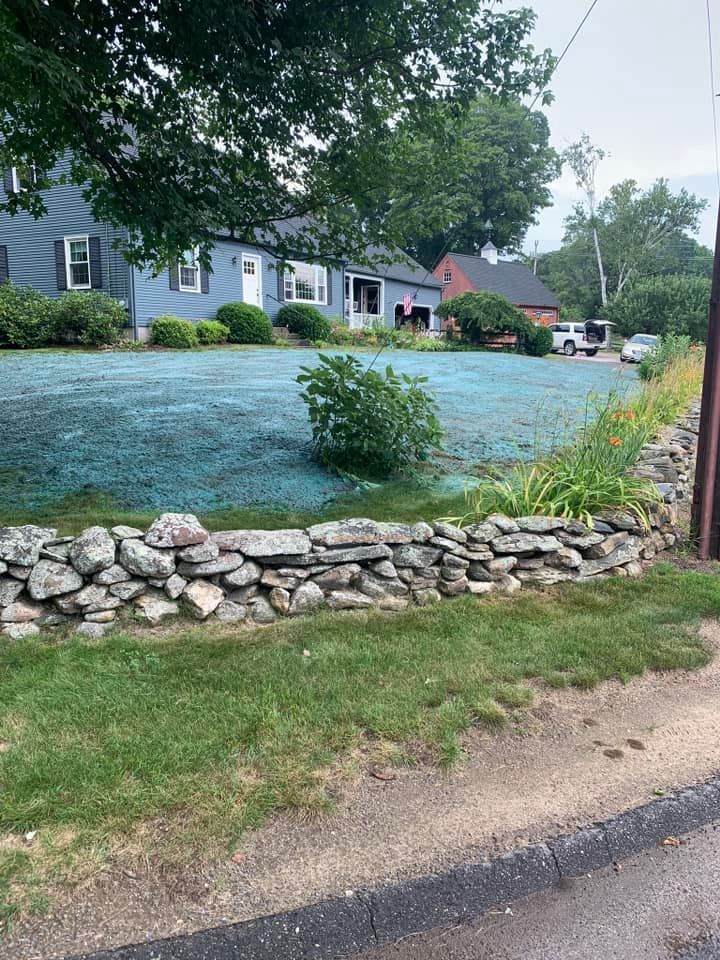
This particular property presented a challenging work zone, which required careful planning and precise equipment operation. The access to the backyard was extremely limited, forcing us to load and operate the truck over a stone wall while working beneath active power lines along the street. Situations like this demand a high level of skill and communication so that the work can be completed safely while protecting nearby structures, utilities, and landscaping. Our operators maneuvered the equipment in tight quarters, maintained safe clearances from overhead lines, and protected the existing stonework and driveway, all while staying on schedule.
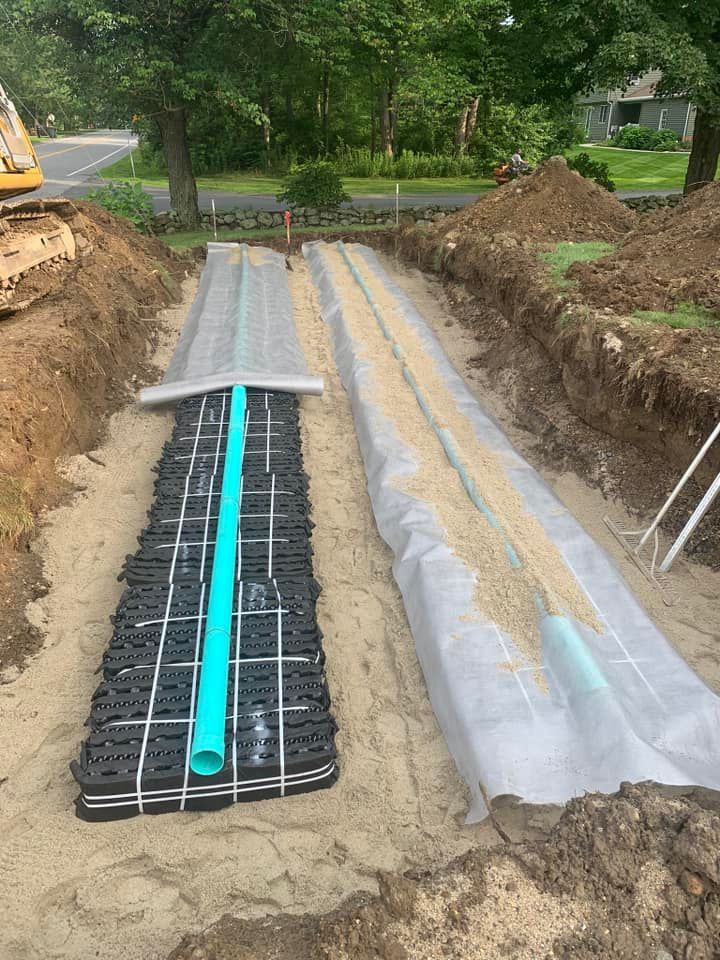
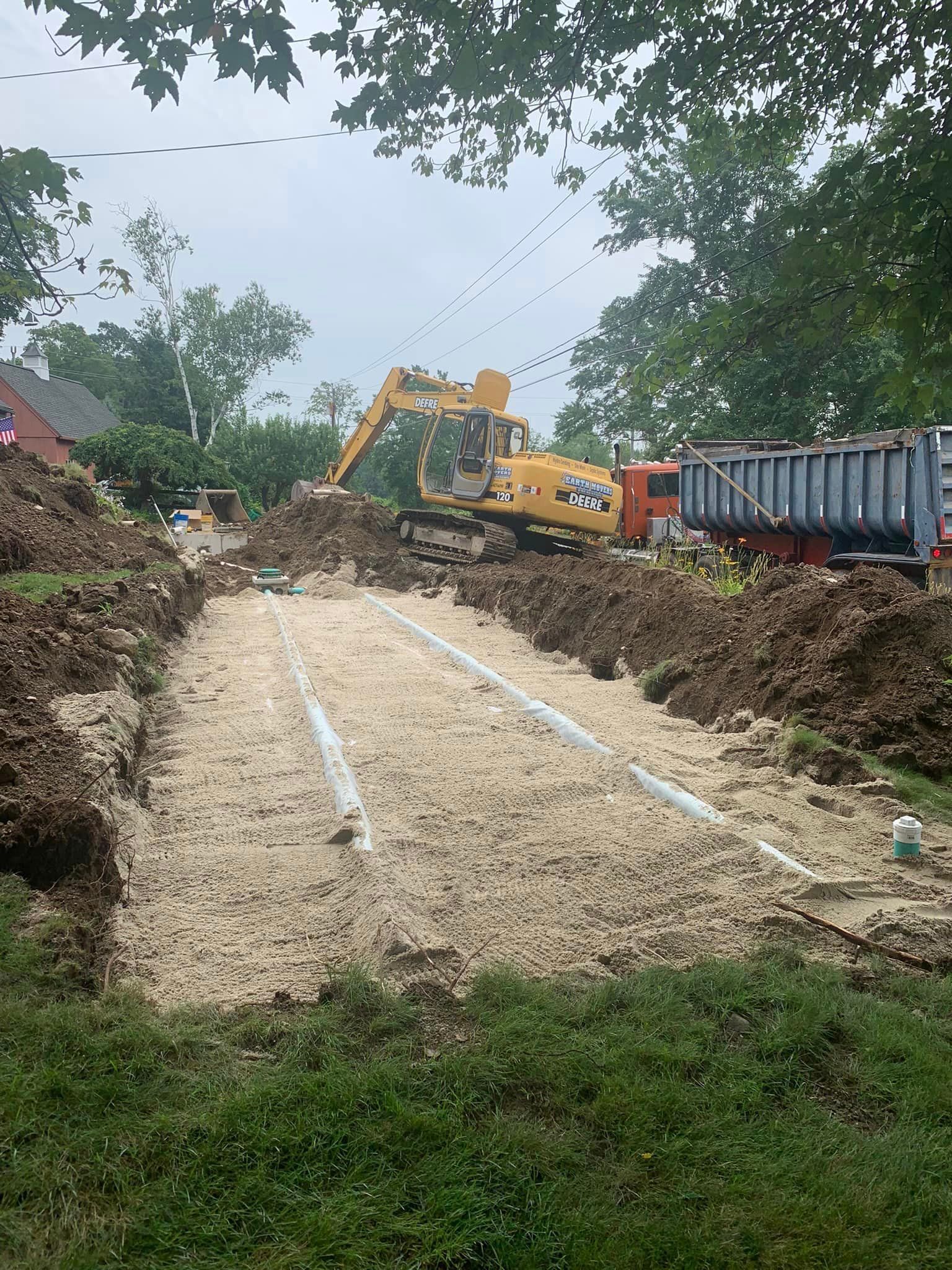
Coordinating with the engineer and town officials was a critical part of keeping this septic installation on track. Throughout the process, we stayed in close contact with the designing engineer to confirm elevations, tank placement, and leach field layout, making sure the system matched the approved plans. As the work reached key milestones, we met with the town inspector on site so they could verify that the tank, piping, and leach field were installed correctly before backfilling. By the time the job was complete, both the engineer and the town inspector were able to sign off, allowing the certificate of compliance to be issued in time for closing.
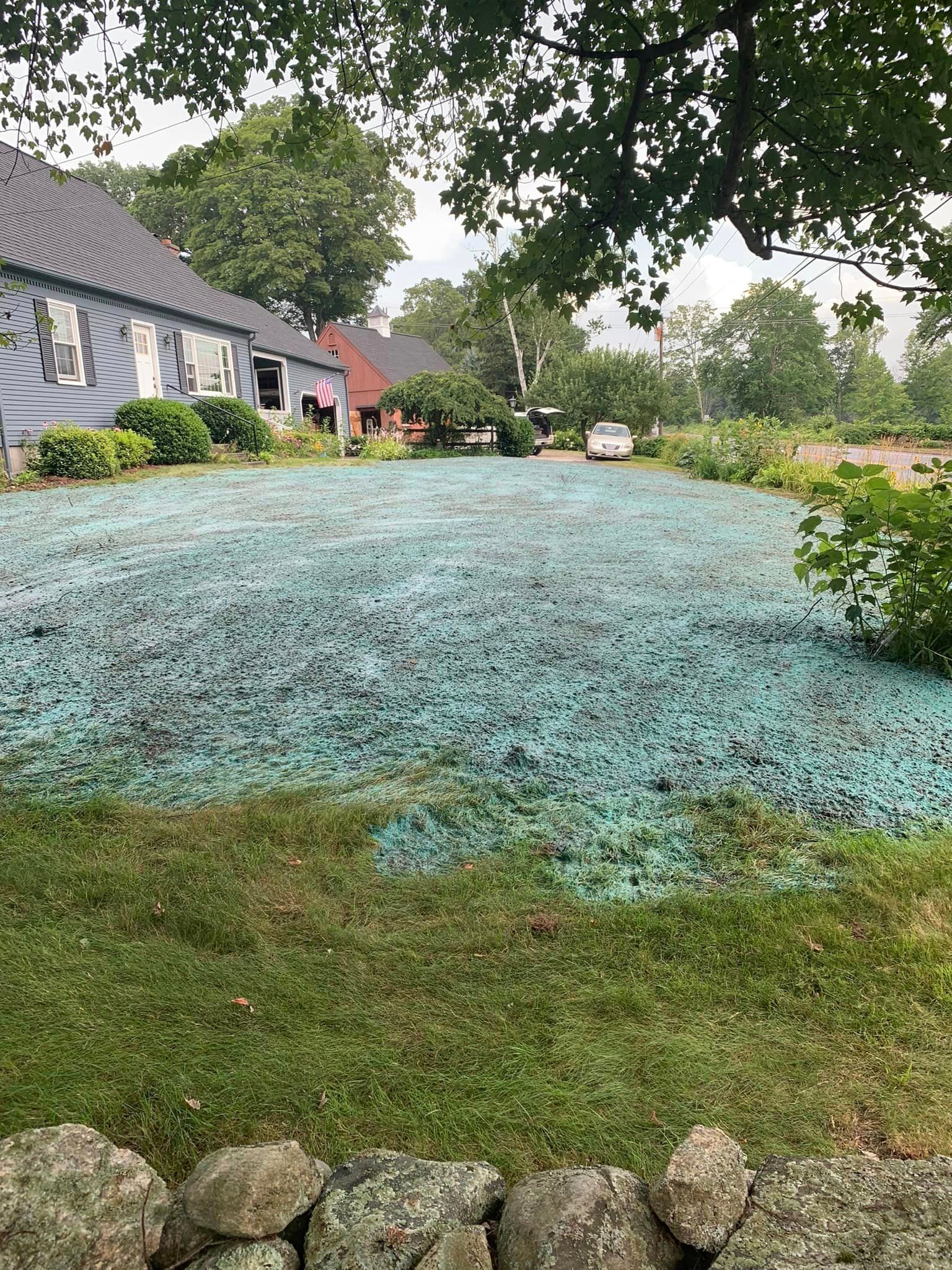
Once the underground work was finished, we shifted focus to restoring the yard so the seller was not left with a torn-up lawn on the day of the sale. The entire disturbed area was covered with fresh screened loam, carefully graded, and raked smooth to create a clean, uniform surface. Good finish grading is important not only for appearance but also for proper drainage away from the home and septic components. When the grading was complete, we hydroseeded the area so the lawn could begin growing back quickly, helping the property look move‑in ready for the buyers.
Hydroseeding is one of the most effective ways to bring a yard back to life after an excavation-heavy project like a septic installation. In this process, we blend grass seed, fertilizer, water, and a fiber mulch into a slurry that is sprayed evenly over the prepared soil. The mulch helps hold moisture against the seed, protects it from erosion and washouts, and encourages fast germination, which is especially important on new grades and leach field mounds. Compared to traditional hand seeding, hydroseeding produces a more consistent stand of grass, fills in bare areas more reliably, and gives homeowners a thick, vibrant lawn in a shorter period of time.
SHARE THIS POST